
From Rapid Trigger to Snap Tap: How modern HE PCBs are changing the game?
Competitive keyboards are seeing a big change. Hall Effect PCBs use magnetic sensors, not metal contacts. This change affects how keys are pressed and can reduce delay in games.

Hall effect technology has been around for decades. But now, gaming firmware makes it feel new. It brings features like rapid trigger and snap tap keyboards.
Now, choosing a keyboard is more than just layout or switch weight. It's about magnetic or mechanical. Mechanical boards offer variety and a familiar feel. But HE designs are pushing the speed limit for esports and FPS games.
Key Takeaways
- Hall effect technology replaces mechanical contacts with magnetic sensors on the PCB.
- A Hall Effect PCB can improve consistency for low latency gaming by measuring travel more directly.
- Magnetic sensor precision helps enable modern tuning that feels faster in play.
- Rapid trigger technology makes quick re-press inputs easier to execute cleanly.
- A snap tap keyboard approach highlights how fast direction changes can feel on HE boards.
- The “magnetic or mechanical” decision is now a real performance choice, not a niche one.
Why Hall effect technology is going mainstream in competitive gaming
Competitive players seek clean inputs for high-pressure situations. Hall effect pcb designs are becoming common on tournament desks. They use magnetic actuation, which offers a more reliable signal.

Magnetic sensors vs. mechanical contacts: what changes on the PCB
Traditional boards use mechanical switches with metal contacts. These contacts must close to register a press.
Magnetic sensors, on the other hand, use a magnet and a sensor on the board. The hall effect pcb reads the magnet's movement. This makes the actuation smoother and more consistent.
Zero physical contact and durability: why magnetic sensor precision lasts longer
Magnetic sensors don't need to touch the sensor to work. This reduces wear and tear over time. It's a big plus for long practice sessions.
For players who practice a lot, magnetic sensors offer consistent results. They provide a stable electrical signal, unlike mechanical switches. This consistency is a big advantage.
Why “magnetic or mechanical?” is now a real upgrade decision
The choice between magnetic and mechanical boards is now more than just sound. Mechanical boards offer a wide range of tactile and clicky options. Some players prefer the crisp bump of mechanical switches.
Custom HE keyboards, on the other hand, focus on speed and repeatability. They might not support all switch types due to pinholes and layouts. The decision depends on whether you value feel or responsiveness more.
Rapid Trigger technology and instant reset: the core of low latency gaming
In fast shooters, a keyboard is more than a tool—it's part of your timing. Low latency gaming is about how fast a key can switch from one input to the next. It does this without adding extra steps.
Rapid trigger technology shines here. It uses Hall effect sensing to track motion in real time. This means the board reacts to what your finger is doing, not a fixed mechanical threshold.

How rapid trigger precision works: reset happens as you start to release
The idea is simple: Rapid Trigger automatically resets the switch as soon as you start to release the key. You don't need to go back to a preset reset point to be ready again.
This instant reset makes rapid trigger precision feel natural. It supports tighter jiggle peeks, cleaner counter-strafes, and quicker micro-corrections. The key can re-fire sooner.
Why mechanical switches feel slower in rapid re-press scenarios
Most mechanical switches have fixed actuation and reset behavior. When you hover near the reset point, fast re-presses can feel delayed. This is because the switch needs a more complete return before it can register again.
This delay is most noticeable during rapid movement inputs. Even with sharp timing, the switch design can add friction to repeated presses.
Processing speed and responsiveness: intent-to-action improvements for competitive FPS gaming
Responsiveness is a chain: intent, press, signal, game action. When processing speed is paired with HE sensing, the keyboard can translate small release-and-press changes into cleaner inputs for competitive FPS gaming.
This is why budget HE boards can surprise people. A model like the Yunzii RT75 can feel more responsive than pricey mechanical boards. This is mainly because rapid trigger technology and instant reset reduce the dead space between actions.
- Fewer missed re-presses during fast strafes
- More consistent rhythm when tapping to control movement
- Cleaner input timing without riding a fixed reset point
Snap Tap keyboard explained: faster directional changes and snap tap performance
Competitive players aim for cleaner movement to win duels. A snap tap keyboard helps with quick direction changes. It improves control without changing how you aim.
What Snap Tap does: pressing again before fully releasing another key
Snap Tap is easy: you press a key again before fully releasing another. This small action makes the keyboard respond faster. In fast games, these small gains add up.
Hall effect boards read switch signals smoothly, not just as clicks. This lets the keyboard respond more like your finger moves. Many players see it as reducing "dead time" left by mechanical switches.
Why it feels “impossibly fast” for movement in shooters
The "impossibly fast" feeling comes from quick direction changes. When you don't have to wait for a full release, the game knows what you want sooner. This makes small movements feel sharper in fast games.
In a Wooting-style setup, it's about processing your input faster. It's not about making extra commands. This is why it's seen as a performance tweak, not a cheat.
Hall Effect PCB, Snap Tap keyboard, Low latency gaming, Custom HE keyboards
A modern Hall Effect PCB makes a Snap Tap keyboard feel through software, not just a switch. This is why low latency gaming can improve without changing parts. It's great for custom HE keyboards made for competitive play.
Dynamic actuation and customizable actuation: setting travel points (commonly 0.1mm to 0.4mm)
The big plus is dynamic actuation. Magnetic sensors track position, so the actuation point isn't fixed like a mechanical switch.
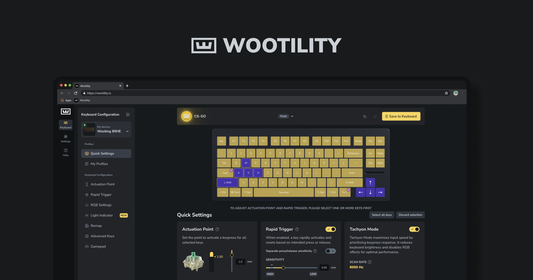
Customizable actuation is set between 0.1mm and 0.4mm. A lower setting is good for fast taps in games. A higher setting helps avoid accidental presses while typing.
Layered actions and macro potentials with hall effect PCB tuning
With hall effect pcb tuning, one key can do more than just turn on or off. You can set up layered actions. A light press can trigger one command, and a deeper press another.
This also makes it easy to set up macros for work and play. Instead of adding more keys, macros can be set on the same switch. They're triggered by how far you press.
Magnetic actuation and instant reset: why HE PCBs enable software-defined behavior
Magnetic actuation lets the keyboard track movement in real time. This way, the firmware can respond right when you change direction. It supports instant reset behavior, making it feel sharp in fast re-press scenarios.
Because it's software-defined, custom HE keyboards can have different settings for games and writing. They use the same hardware and sensors.
Keyzen Studio modular builds on elite HE platforms (Wooting 60v2 PCB, Babao60 HE, Nexus61s)
Keyzen Studio was born from a deep frustration. Marco, Kevin, and Jackson wanted a setup that was both high-end and personal. They aimed to create a modular system that let you customize every key, keeping speed a top priority.
The journey began with elite platforms like the Wooting 60v2 PCB, Babao60 HE, and Nexus61s. These platforms transform a keyboard into a precise instrument. They offer consistent sensing and tight control, perfect for competitive play.
Next, the build becomes truly personal. A carbon fiber plate adds firmness and keeps inputs steady. A Daibox aluminum case brings weight and cleaner sound. Sound packs help shape the pitch and damping, ensuring the board stays sharp in-game and pleasing off-match.
Choosing the right switch completes the build. The Gateron Magnetic Jade Pro HE switch focuses on clean travel and smoothness. Wuque Studio WS Flux and Mount Tai GT switch offer different sound and feel options. This meets the high expectations of enthusiasts, who value look, feel, and clicks as much as speed.
FAQ
What is the core shift that makes Hall effect keyboards different from mechanical keyboards?
Hall effect keyboards use magnets and sensors instead of metal contacts. This means they don't need a physical touch to work. They read the switch's position through magnetic sensors.
Has Hall effect technology always been a “gaming” thing?
No. Hall effect technology has been around for decades. It became popular in gaming when features like Rapid Trigger and Snap Tap showed its speed benefits.
What changes on the PCB with magnetic sensors vs. mechanical contacts?
Mechanical switches need a physical touch to work. Hall effect keyboards use magnets and sensors. This lets them actuate without needing a full press.
Why are HE keyboards linked to “zero physical contact” and durability?
HE switches don't need to touch the sensor. This reduces wear and tear. It's good for heavy use where mechanical switches might fail.
Is “magnetic or mechanical?” really an upgrade decision now?
Yes. Choosing between magnetic speed and mechanical feel is now a common debate. Mechanical keyboards are popular, but HE is gaining attention for its speed.
What is Rapid Trigger, exactly?
Rapid Trigger resets the switch as soon as you start to release the key. It tracks your movement for faster re-press timing.
Why does Rapid Trigger feel faster in real gameplay?
Hall effect technology lets keys actuate without returning to their start. This is great for fast movements and micro-corrections.
Why can mechanical switches feel slower in rapid re-press scenarios?
Mechanical switches need a full cycle to actuate again. This can feel slower when tapping fast.
Does HE actually improve “intent-to-action-to-response” in low latency gaming?
Often, yes. HE technology better matches how players release and re-press keys. This is key in competitive FPS gaming.
Can even a budget HE board feel faster than an expensive mechanical one?
Yes. Boards like the Yunzii RT75 can be more responsive than premium mechanical keyboards. This is due to HE's faster reset and actuation.
What is Snap Tap on a snap tap keyboard in plain terms?
Snap Tap lets you press a key again before fully releasing another. This makes movement and transitions feel immediate on HE keyboards.
Why do players describe Snap Tap movement as “impossibly fast”?
It's the combo of Snap Tap and magnetic actuation. Mechanical boards can't match the speed of HE boards in fast strafes.
Is “Rappy Snappy” considered cheating?
The debate is about whether it's cheating or not. It's about processing human input faster. The line is drawn at automation versus real input.
Why do people debate Wooting-style behavior vs. null-input behavior?
It's about how it reflects the user's actions. Wooting-style is seen as more authentic. Null-input can look like extra inputs.
Will tournaments ban Snap Tap and Rapid Trigger features?
Many think the pro scene might not ban it. It could be seen as unfair or spark a hardware race. Scripts and nullbinds have been around for years.
What are dynamic actuation points, and why do HE boards offer them?
HE boards can set actuation points in software. This lets you choose how close the magnet must get to the sensor. It's customizable.
What actuation range do players commonly use for HE settings?
Players often use 0.1mm to 0.4mm. Lower settings are faster, while higher settings are more controlled.
Can custom HE keyboards support layered actions and macros?
Yes. HE software can assign different actions based on how far you press. This opens up macro workflows.
Why do HE PCBs enable software-defined behavior better than mechanical designs?
Magnetic sensors report continuous key position. This makes magnetic actuation and instant reset possible. It's what enables Rapid Trigger and Snap Tap.
Are HE keyboards only about speed, or can they feel premium too?
They can be both. Boards like the ATK x QK Hex80 are praised for their look, feel, and clicks. HE is now a full enthusiast experience.
What is Keyzen Studio, and why does it focus on HE platforms?
Keyzen Studio aims to find the perfect setup. Founded by Marco, Kevin, and Jackson, it focuses on high-end performance and personal expression.
Which HE platforms are commonly used for Keyzen Studio modular builds?
Keyzen Studio builds often use elite HE platforms like the wooting 60v2 pcb. These platforms support low latency gaming.
How does HE switch choice affect feel and sound on modular builds?
Switch choice affects smoothness, sound, and weight. Popular options include the Gateron Magnetic Jade Pro HE switch. These can be tuned for different feels.
What other parts shape the feel of a Keyzen Studio modular system?
Plates, cases, and tuning all matter. A carbon fiber plate can change stiffness and sound. Cases and sound packs help fine-tune the acoustics.
Are HE boards less customizable than mechanical keyboards?
Often, yes. Mechanical boards support hot-swappable switches and have more options. HE customization is limited by the smaller magnetic ecosystem.